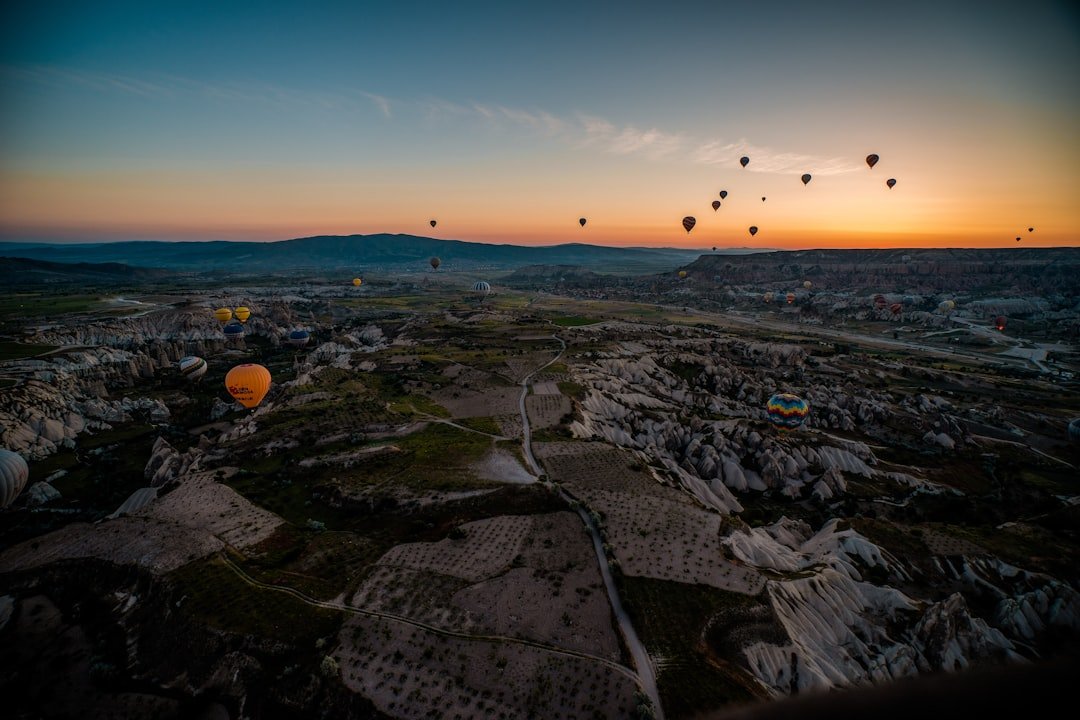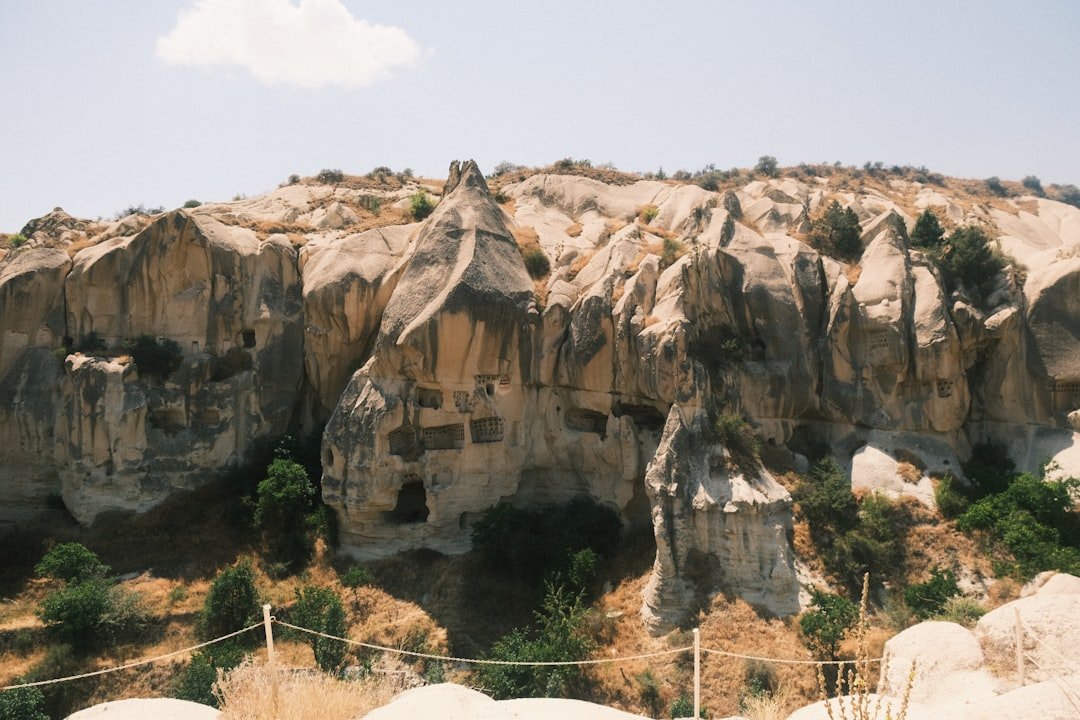
Cappadocia is a genuinely good birdwatching destination: its mix of river wetlands, steppe, orchards and rocky valleys supports raptors like the long-legged buzzard, colourful European bee-eaters, rock nuthatches and migrating waterbirds. The best sites are Sultan Marshes (Sultansazlığı), Rose Valley, the Kızılırmak (Red River) wetlands, Ihlara Valley and Soğanlı Valley — and because most of them sit well outside Göreme with no public transport, the simplest way to cover several in a morning is a private vehicle that waits while you watch. For current point-to-point fares, see the Cappadocia taxi price calculator.
Why Cappadocia is good for birdwatching
Central Anatolia sits on a major migration corridor between Europe, Africa and Asia, so spring and autumn bring large movements of raptors, storks and waterfowl. Cappadocia adds an unusual variety of habitats within a short drive: volcanic-tuff cliffs where rock-dwelling species nest, river gorges with dense riverside vegetation, irrigated orchards, open steppe, and — just south of the region — one of Turkey's most important wetlands. That diversity is why a single day here can produce raptors, songbirds and waterbirds without long taxi rides between them.
The best birdwatching sites in Cappadocia
Sultan Marshes (Sultansazlığı National Park)
Sultansazlığı, roughly an hour to the south near Kayseri, is the single richest birding spot in the area — a Ramsar-listed wetland of reedbeds and shallow lakes. Expect flamingos, herons, egrets, ducks, grebes and, in season, large numbers of migrating waterbirds. It is the one site worth a dedicated half-day. Bring a scope if you have one; the open water means birds are often distant. There is no scheduled transport, so a private taxi that waits is the practical option.
Rose Valley & Red Valley (near Göreme)
The pink-rock valleys right beside Göreme are the easiest birding to combine with sightseeing. Among the vineyards, orchards and cliff faces you'll commonly see European bee-eaters perched on wires in summer, rock nuthatches working the tuff walls, black-eared wheatears on open ground, and several warbler species in the scrub. Early morning is best, before the hiking crowds and balloon traffic. Entry to Red Valley Park costs €25; the wider Rose and Red Valley trails are free to walk.
- European bee-eater — bright, social, perched on wires and branches (summer).
- Rock nuthatch — climbs vertical tuff faces searching for insects.
- Black-eared wheatear — ground-dwelling, common in open patches.
- Warblers — several species in the valley-floor bushes and trees.
Kızılırmak (Red River) wetlands near Avanos
Turkey's longest river runs through the northern edge of Cappadocia at Avanos. The reedy margins, sandbanks and surrounding farmland attract ducks (mallard, teal), grebes, waders such as sandpipers and plovers, herons and white storks that nest on village rooftops nearby. Several access points along the river give different views, so a vehicle helps you hop between them. If you're staying in Avanos this is your closest serious birding.
Ihlara Valley
Ihlara is a deep gorge cut by the Melendiz River, about a 1–1.5 hour drive southwest of Göreme. The lush riverside corridor is a different world from the dry plateau above: look for kingfishers darting over the water, grey herons in the shallows, Eurasian sparrowhawks hunting along the cliffs, and the often-heard, rarely-seen Cetti's warbler in the dense bankside cover. The valley walk also passes painted rock churches, so it doubles as a culture day. Entry is €15. See our guide to a day in Ihlara Valley for the full walking route.
Soğanlı Valley
Soğanlı, in the far south, is quiet, remote and excellent for raptors over open country — long-legged buzzards soaring on thermals, lesser kestrels hunting insects, and Eastern Orphean warblers in the scrub around the villages. It rewards patience and is one of the least-disturbed corners of the region. Entry is €4. There is essentially no public transport here; most birders arrange a taxi to Soğanlı Valley with a wait-and-return.
When to go: best months for birdwatching
The two migration windows are the prime times. Spring (late March–May) brings breeding plumage, song and arriving migrants; autumn (September–October) brings southbound raptors and waterbirds. Summer is hot but reliable for bee-eaters, rollers and resident cliff species — start at dawn. Winter is quiet inland but can concentrate waterfowl at the Sultan Marshes.
- Best overall: April–May and September–October (peak migration).
- Best time of day: the first two to three hours after sunrise.
- Bring: binoculars (a scope for the wetlands), a regional field guide or app, layers, a hat, sun protection and water.
- Etiquette: stay on trails, keep your distance from nests, and take all litter out.
Getting to the birdwatching sites
Rose and Red Valley are within walking or a few minutes' drive of Göreme, but the best sites — Sultan Marshes, Ihlara, Soğanlı and stretches of the Kızılırmak — are 45 minutes to 1.5 hours away with no useful bus links and no taxi ranks waiting at the trailhead. Birding also means flexible timing: you want to be on site at first light and to linger when birds are active. A private taxi that drops you, waits and returns solves both problems, and you can chain two or three sites in a day.
Tip: ask your driver to wait rather than booking a one-way drop. Remote sites have no return transport, and the best light for birds rarely fits a fixed pickup time.
Fares depend on the route, distance and how long the driver waits, so we don't publish fixed numbers — get an exact, up-to-date quote on the Cappadocia taxi price calculator. If you're arriving for the trip, see our Cappadocia airport taxi options, and browse more Cappadocia nature and hiking routes to plan around the valleys.
Frequently Asked Questions
What is the best birdwatching site in Cappadocia?
The Sultan Marshes (Sultansazlığı National Park), about an hour south near Kayseri, is the richest site — a protected wetland with flamingos, herons, ducks and large numbers of migrating waterbirds. For birding combined with scenery, Rose Valley beside Göreme is the easiest, and Ihlara and Soğanlı valleys add raptors and riverside species.
When is the best time of year to watch birds in Cappadocia?
Spring (late March to May) and autumn (September to October) are best, because Cappadocia sits on a major migration route and these windows bring the widest variety of species. Within any day, the first two to three hours after sunrise are the most productive.
How do I get to remote birdwatching valleys like Soğanlı or the Sultan Marshes?
These sites have no scheduled public transport and no taxis waiting at the trailheads, so the practical option is a private taxi that drops you off and waits. This lets you arrive at first light and stay as long as the birds are active. Check the current fare on the Cappadocia taxi price calculator.
Can I see birds in Cappadocia without a guided visit?
Yes. Rose Valley and Red Valley next to Göreme are free to walk and easy to bird independently at dawn, and the Kızılırmak riverbanks at Avanos are within reach. For the more distant wetlands and valleys, an independent traveller usually arranges a private taxi with a wait rather than joining a fixed group outing, which keeps your timing flexible.
Do I need to pay an entrance fee for birdwatching?
Most valley trails are free to walk, but some maintained sites charge entry: Ihlara Valley costs €15 and Soğanlı Valley €4. The open Rose and Red Valley footpaths are free, though the developed Red Valley Park section charges €25.